

Off-Road & Over-Landing Chapter
Setting Standards for All Wheel-Based Adventure Activities in South Africa
The Off-Road & Over-Landing Chapter develops and maintains SA AIA's official technical standards, curricula, and accreditation systems for all wheel-based adventure and expedition activities. Our purpose is to build a unified, credible, professional standard for training, guiding, outdoor education practice, safety, and environmental responsibility across South Africa's diverse wheel-based adventure sector.
About the Chapter
The Off-Road & Over-Landing Chapter brings together 4X4 instructors, MTB guides, outdoor education practitioners (facilitators), overlanding operators, quad and motorbike tour providers, industrial users, field workers, and land managers to develop clear, nationally aligned standards for all wheel-based activities.
Our work includes:
-
Establishing Technical Skills Guidelines for each activity.
-
Creating SA AIA-approved curricula (Level 1-3 structures where applicable).
-
Accrediting Skills Development Partners (SDPs) and Instructors.
-
Supporting safe, environmentally responsible practices on trails, tracks, and wilderness areas.
-
Providing transparent, credible expectations for public, training, industry and regulatory use.
This chapter works across multiple sectors: adventure tourism, mountain biking operations, overlanding, safari guiding,
conservation and field work, mining, emergency response, and outdoor education.

Chapter Chairperson:
Mr JJ du Plooy
Wheel-Based Activities Covered by This Chapter
This chapter governs current and future SA AIA technical competencies for all wheel-based adventure and expedition activities.
-
Mountain Biking
-
E-Bikes
-
Off-Road Scooters
-
Overlanding Trucks & Vehicle-Based Expeditions
-
Future activities to be added
Each activity will have its own Technical Skills Guideline, Curriculum, and Accreditation Requirements as documents are completed.
Technical Competencies:
Four-Wheel Drive (4X4)
(First to be Published - 2025)
The Four-Wheel Drive (4X4) competency set is the first officially published technical standard under the Off-Road & Over-Landing Chapter.
It consists of three integrated components:
-
Technical Skills Guideline (public)
-
Official SA AIA Curriculum (Level 1, Level 2, Level 3)
-
Skills Development Partner & Instructor Accreditation Requirements
Each is available for R0 licensed download through SA AIA.

Public-facing guideline that defines the scope of practice, minimum competencies, safety standards, environmental expectations and assessment view for 4WD operators and instructors.

The official SA AIA curriculum for 4WD training – detailing Level 1, 2 and 3 learning outcomes, course durations, training methods and assessment approach for instructors and Skills Development Partners.

Accreditation requirements for 4WD, Adventure Motorcycles, Quad Bikes and Side-by-Sides training providers (SDPs) and instructors: qualifications, experience, training material, equipment, venue standards and learner certificate requirements.
Adventure Motorcycles
The SA AIA Adventure Motorcycles curriculum provides a structured training pathway for the safe and responsible operation of adventure motorcycles in off-road conditions. It includes three progressive course levels (Introduction, Basic, and Advanced), with clear learning outcomes, delivery guidance, and assessment requirements.
Available documents:
-
Courses Curriculum (Rev 1) – Download the official curriculum for training delivery and assessment.
-
Competency Framework – In development
-
Technical Skills Guideline – In development
Each is available for R0 licensed download through SA AIA.

Public-facing guideline that defines the scope of practice, minimum competencies, safety standards, environmental expectations and assessment view for Adventure Motorcycle operators and instructors.

This curriculum forms part of the SA AIA Technical Competency Framework and provides a structured pathway for the safe and responsible operation of adventure motorcycles in off-road conditions. It includes three progressive course levels (Introduction, Basic and Advanced) with clear learning outcomes, delivery guidance and assessment requirements for training providers and instructors.
Accreditation requirements for 4WD, Adventure Motorcycles, Quad Bikes and Side-by-Sides training providers (SDPs) and instructors: qualifications, experience, training material, equipment, venue standards and learner certificate requirements.
Quad Bikes & Side-by-sides
The SA AIA Quad Bikes and Side-by-Sides competency framework supports the safe, responsible and environmentally conscious operation of quad bikes and side-by-side vehicles in off-road conditions.
The framework includes three progressive training levels — Introduction, Basic and Advanced — and provides guidance on technical competence, safety, assessment and responsible off-road practices.
Available documents:
• Quad Bikes and Side-by-Sides Technical Skills Guideline
• Operating Adventure Quad Bikes and Side-by-Sides in Off-road Conditions – Courses Curriculum
• Off-Road Skills Development Partner and Facilitator Accreditation Requirements
Each is available for R0 licensed download through SA AIA.

Public-facing guideline that defines the scope of practice, minimum competencies, safety standards, environmental expectations and assessment view for Quad Bikes and Side-by-Sides operators and instructors.
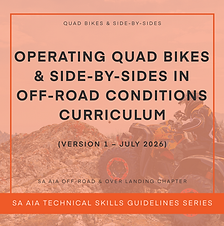
This curriculum forms part of the SA AIA Technical Competency Framework and provides a structured pathway for the safe and responsible operation of quad bikes and side-by-sides in off-road conditions. It includes three progressive course levels (Introduction, Basic and Advanced) with clear learning outcomes, delivery guidance and assessment requirements for training providers and instructors.
Accreditation requirements for 4WD, Adventure Motorcycles, Quad Bikes and Side-by-Sides training providers (SDPs) and instructors: qualifications, experience, training material, equipment, venue standards and learner certificate requirements.
Training & Accreditation Pathway
How the Framework Works
Every wheel-based activity in this chapter will follow the same national standisation structure:
1. Technical Skills Guideline (Defines what competent looks like)
2. SA AIA Curriculum (Defines the formal learning pathway, progression levels, assessment structure, and training methods)
3. Accreditation Requirements (Defines what a provider/instructor must meet to deliver recognised SA AIA-aligned training)
This ensures training is credible, consistent, and nationally recognisable, no matter who delivers it.
Chapter News & Updates
SAN Parks Recognises SA AIA Membership for SAN Parks Travel Trade Registration
SA AIA membership serves as recognised proof of association with a professional tourism body where such recognition is required.
26/02/16
SA AIA Launches 4x4 and Overlanding Chapter
SA AIA Launches 4x4 and Overlanding Chapter to Elevate Professional Standards in the Adventure Industry
24/09/30
SA AIA Launches South Africa’s First Standardised Technical Competency Framework for 4x4 Off-Road Driving
A major milestone for professionalism, safety, and national standardisation in the adventure tourism and outdoor learning industries
25/10/31
SA AIA Launches Expanded Off-Road and Overlanding Chapter and more
Latest news and updates from the SA AIA Overlanding Chapter
25/04/10
Related Articles


Chapter Members & Industry Partners
Get Involved with the Off-Road & Over-Landing Chapter
If you're an operator, instructor, guide, outdoor education practitioner (facilitator), landowner, trail developer, school, commercial provider, or work in any wheel-based field (including mining, conservation, or emergency response), you're invited to participate.